Xiamen Tmax Battery Equipments Limited was set up as a manufacturer in 1995, dealing with Laboratory equipments, technology, etc. We have total manufacturing facilities of around 2, 000 square meters and more than 100 staff. Owning a group of experie-nced engineers and staffs, we can bring you not only reliable products and technology, but also excellent services and real value you will expect and enjoy.
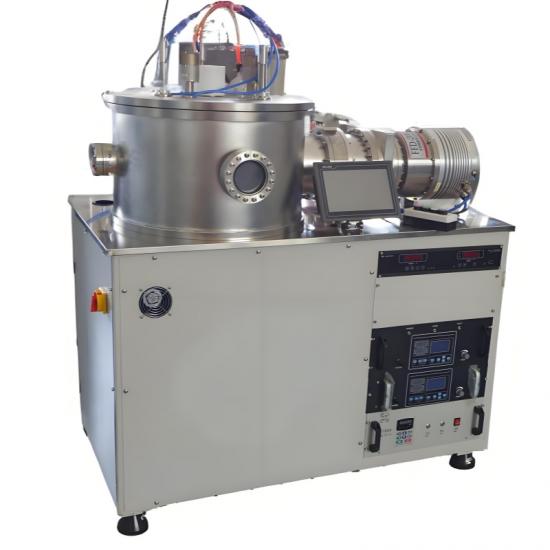
Lab Sputtering Coater: Precision Thin-Film Deposition for Research and Development
Overview
A Lab Sputtering Coater is a compact, high-precision vacuum deposition system designed specifically for research and laboratory applications. It enables the deposition of ultra-thin films of metals, alloys, or compounds onto various substrates through the physical vapor deposition (PVD) process. By utilizing sputtering technology, the lab sputtering coater provides highly uniform, adherent, and controlled coatings essential for material characterization, microscopy, and experimental studies. Its versatility, ease of operation, and reliability make it an indispensable tool in academic research, material science labs, and small-scale R&D facilities.
Key Features
Lab sputtering coaters are engineered with a focus on precision, safety, and user-friendly operation. Key features include a high-vacuum chamber with efficient pumping systems to minimize contamination and achieve stable deposition conditions. The equipment typically supports multiple target materials, allowing researchers to experiment with different metals, alloys, and compound films without extensive setup changes.
Modern lab sputtering coaters are equipped with digital control interfaces, enabling precise adjustment of parameters such as sputtering power, deposition time, chamber pressure, and gas flow. Many systems also feature substrate rotation, sample holders accommodating multiple specimens, and automated programs to ensure uniform coating across all samples. Compact design and low footprint make these systems suitable for laboratory environments without compromising performance.
Working Principle and Coating Process
The coating process begins with placing substrates into the vacuum chamber and evacuating it to achieve the required base pressure. An inert gas, usually argon, is then introduced into the chamber. When electrical power is applied to the target material, argon ions are accelerated toward it, generating a plasma. The energetic ion bombardment ejects atoms from the target surface, which then travel through the vacuum and condense onto the substrate, forming a thin, uniform film.
Lab sputtering coaters offer precise control over deposition parameters, allowing researchers to achieve film thicknesses from a few nanometers to several hundred nanometers, depending on experimental requirements. The process is clean, reproducible, and compatible with delicate or small-scale samples, making it ideal for scientific research.
Metal Film Deposition
Applications
Lab Sputtering Coaters are widely used in various research and development fields. In materials science, they are employed for studying surface properties, thin-film growth, and coating effects on mechanical and electrical performance. In microscopy, these systems are essential for preparing non-conductive samples for scanning electron microscopy (SEM), preventing charging effects and improving imaging resolution.
In the electronics and semiconductor fields, lab sputtering coaters are used for small-scale deposition of conductive films, electrodes, and interconnect layers. They are also applied in nanotechnology, photonics, and optical research, enabling the development of thin-film sensors, reflective coatings, and functional surface modifications. Furthermore, life sciences and biological research utilize these systems to coat specimens for high-resolution imaging.
Advantages
One of the main advantages of a lab sputtering coater is its ability to produce highly uniform, dense, and adherent films on small and delicate substrates. The controlled vacuum environment minimizes contamination, ensuring high-purity deposition suitable for sensitive analytical applications.
Another significant benefit is the versatility and flexibility of the system. Researchers can experiment with a wide variety of target materials, substrate types, and deposition parameters, making it ideal for R&D work. Lab sputtering coaters also offer rapid coating cycles, easy operation, and reproducibility, allowing consistent results across multiple experiments. Their compact size and safety features further enhance their suitability for laboratory environments.
Conclusion
In conclusion, the Lab Sputtering Coater is an essential tool for precision thin-film deposition in research and development. With its advanced features, precise control over coating parameters, and broad range of applications, it provides reliable and high-quality coatings for laboratories, academic institutions, and R&D facilities. By enabling reproducible and uniform thin films, the lab sputtering coater continues to support innovation and experimental research across materials science, electronics, optics, and nanotechnology.